
The Rising Cost of Fuel – And What It Means for Construction in Sydney
There’s no avoiding it, fuel prices are rising, and the impact is being felt across every part of the construction industry in Sydney. From suppliers and transport companies through to builders, trades, and scaffold contractors, fuel is one of the key cost drivers behind how projects operate day to day. And right now, that cost is under serious pressure.
Why Fuel Prices Are Increasing
The current spike in fuel costs is largely being driven by global instability, particularly conflict in the Middle East, which has disrupted oil supply chains and pushed prices higher worldwide. In Australia, this has translated quickly to the bowser with diesel and petrol rising sharply, in some cases by over 50% in recent weeks. Diesel in particular is critical, as it underpins freight, logistics, and construction operations, meaning the effects flow through almost immediately.
The Flow-On Effect to Construction
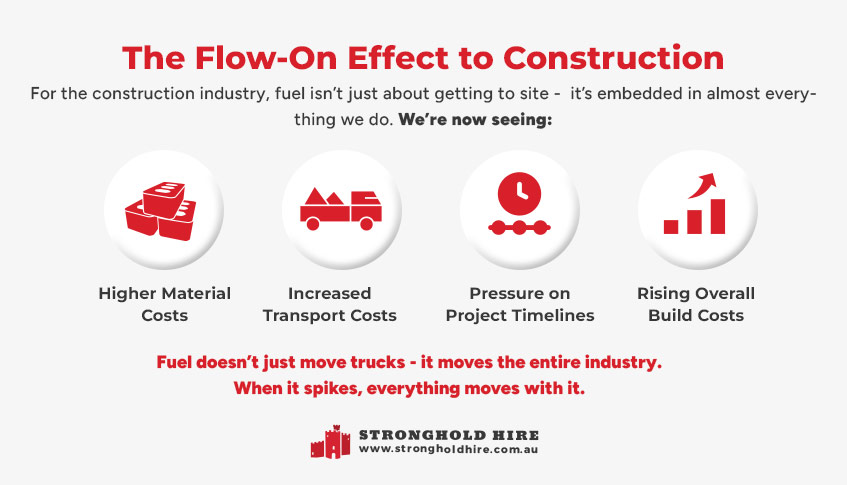
For the construction industry, fuel isn’t just about getting to site – it’s embedded in almost everything we do. We’re now seeing:
- Higher material costs due to fuel levies being added to deliveries like concrete, sand, and piping
- Increased transport costs across all trades and suppliers
- Pressure on project timelines as logistics become more complex
- Rising overall build costs, with forecasts of 4–6% increases nationally in 2026
Fuel doesn’t just move trucks—it moves the entire industry. When it spikes, everything moves with it.
How It Affects Stronghold Hire
At Stronghold Hire, fuel is a major part of how we operate. We run multiple trucks and utes daily across Sydney – delivering, installing, dismantling, and collecting scaffolding, edge protection, and access systems. Every job relies on transport. While we have introduced a small increase in transport charges, the reality is: It does not come close to covering the true rise in fuel costs. Instead, we’ve made a conscious decision to absorb a significant portion of these increases. Why? Because:
- We want to remain competitive
- We want to protect our clients from sudden cost blowouts
- And we understand that everyone in construction is feeling the same pressure
It’s not sustainable long-term but it’s the right thing to do right now.
Industry-Wide Adjustments
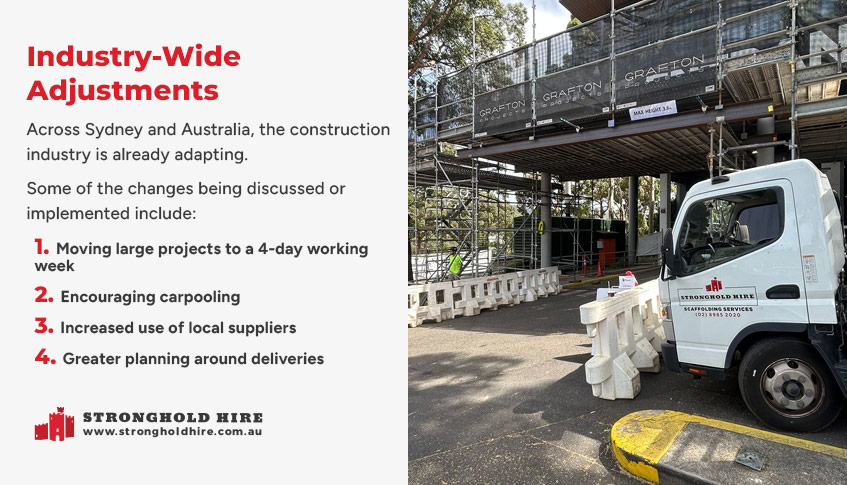
Across Sydney and Australia, the construction industry is already adapting. Some of the changes being discussed or implemented include:
- Moving large projects to a 4-day working week to reduce travel and plant usage
- Encouraging carpooling among workers and trades
- Increased use of local suppliers to reduce transport distances
- Greater planning around deliveries to minimise repeat trips
We’re also seeing a shift in behaviour more broadly, with less driving and increased reliance on alternative transport as fuel prices bite.
What the Government Is Doing
The government is actively trying to manage the situation, although options are limited given the global nature of the issue. Current measures include:
- Releasing emergency fuel reserves to ease supply pressure
- Running national campaigns to encourage reduced fuel usage
- Working with international partners to secure fuel supply chains
- Increased focus on public transport usage to reduce demand
There have also been discussions around broader cost-of-living relief, including potential reductions in fuel-related taxes, although these measures take time to filter through.
A Challenging Period for Everyone
There’s no doubt that this is a difficult time for the construction industry. Margins are tight, costs are rising, and uncertainty makes planning harder than ever. But like many challenges before, the industry is adapting and businesses are finding ways to keep projects moving.
Looking Ahead
Ultimately, much of this comes down to global events outside of Australia’s control. Like everyone else, we are hopeful for:
- A resolution to ongoing conflicts
- Stabilisation of global oil markets
- And a return to more normal fuel pricing
Our Commitment
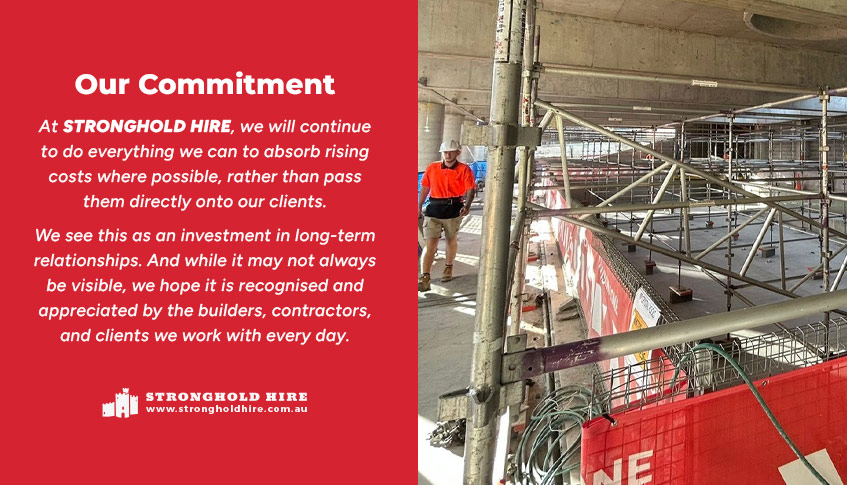
At Stronghold Hire, we will continue to do everything we can to absorb rising costs where possible, rather than pass them directly onto our clients. We see this as an investment in long-term relationships. And while it may not always be visible, we hope it is recognised and appreciated by the builders, contractors, and clients we work with every day.
