
How to Protect Your Home from Weather During Renovation
If you’re renovating your home, one of the biggest concerns is simple (and very valid): how do I keep the weather out while the work is going on? Rain, wind, dust and debris don’t just slow a project down — they can cause serious damage to interiors, finishes and materials if the building is left exposed. At Stronghold Hire, we’re often brought in when a renovation needs more than a basic perimeter scaffold system. This is where scaffold shrink wrap and temporary roof systems come into play.
What Is Shrink Wrap Scaffolding?
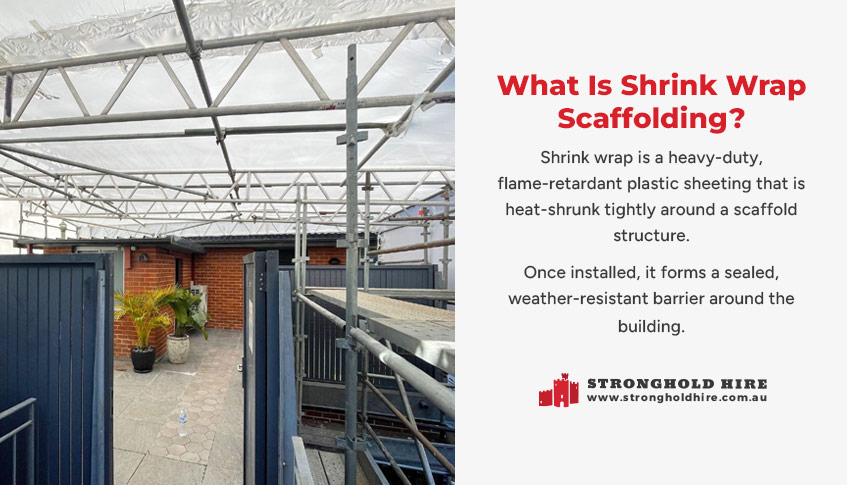
Shrink wrap is a heavy-duty, flame-retardant plastic sheeting that is heat-shrunk tightly around a scaffold structure. Once installed, it forms a sealed, weather-resistant barrier around the building. Unlike loose tarps or builder’s plastic, shrink wrap:
- Is fully tensioned (no flapping in the wind)
- Creates a sealed envelope around the structure
- Can be installed vertically (walls) and horizontally (temporary roofs)
- Is engineered to cope with wind loads when correctly designed and installed
In short, it turns your scaffold into a protective shell.
The Benefits of Weather Protection During Renovation
Using shrink wrap during a renovation offers some major advantages:
Keeps the Weather Out
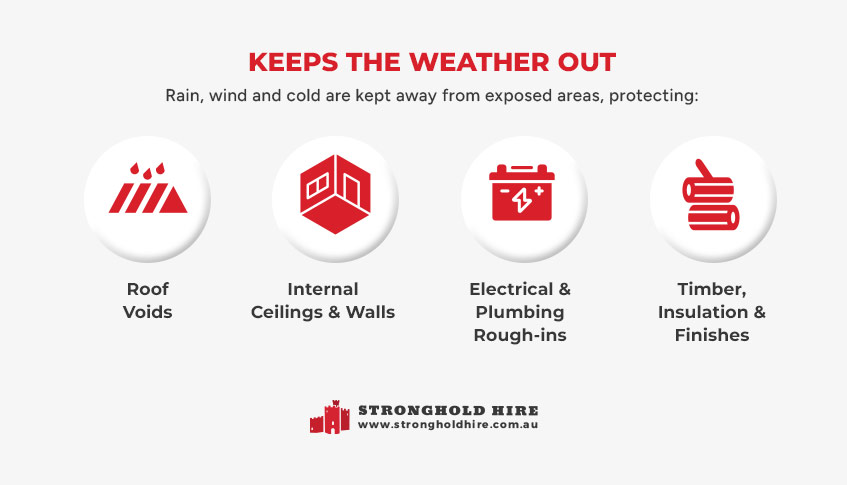
Rain, wind and cold are kept away from exposed areas, protecting:
- Roof voids
- Internal ceilings and walls
- Electrical and plumbing rough-ins
- Timber, insulation and finishes
Keeps the Project Moving
Trades can keep working in poor weather, helping avoid delays and costly downtime.
Improves Safety & Site Control
Shrink wrap reduces wind exposure, contains dust and debris, and improves overall site safety — especially on multi-storey or exposed sites.
Protects Neighbours & Surroundings
Ideal for tight residential areas, as it helps contain dust, debris and overspray.
The Real Challenges: Roof Span & Uplift
While shrink wrap looks simple once it’s installed, the engineering behind it is critical.
1. Roof Span & Scaffold Distances
One of the biggest challenges is the distance between scaffold runs, particularly when spanning over a roof. Temporary roof structures must be designed to:
- Bridge large spans safely
- Support shrink wrap loads
- Allow for drainage and fall where required
This often means additional scaffold height, beams and bracing compared to a standard perimeter scaffold.
2. Wind Load & Uplift
Shrink wrap effectively turns the scaffold into a sail. Wind doesn’t just push against it — it can try to lift the entire structure.
To manage uplift, the scaffold must be:
- Professionally engineered
- Properly braced
- Anchored back to the structure or ground
- Designed to suit the specific site exposure (coastal, elevated, cliff-top, etc.)
This is not an area for shortcuts. Incorrectly designed shrink wrap scaffolding can be dangerous.
Let’s Talk Shrink Wrap Budget (Honestly)
A common question we get is: “Why is shrink wrap so much more expensive than a normal scaffold?” The short answer: because it’s a completely different level of system.
In many cases, a full shrink wrap installation can be up to three times the cost of a standard perimeter scaffold. This is due to:
- Increased scaffold height and complexity
- Temporary roof structures
- Engineering design and certification
- Additional labour and installation time
- Flame-retardant shrink wrap material
- Extra bracing, anchors and tie-ins
While the upfront cost is higher, it often pays for itself by:
- Preventing water damage
- Avoiding delays
- Protecting finishes and materials
- Keeping trades working through bad weather
Is Shrink Wrap Worth It for Residential Renovations?
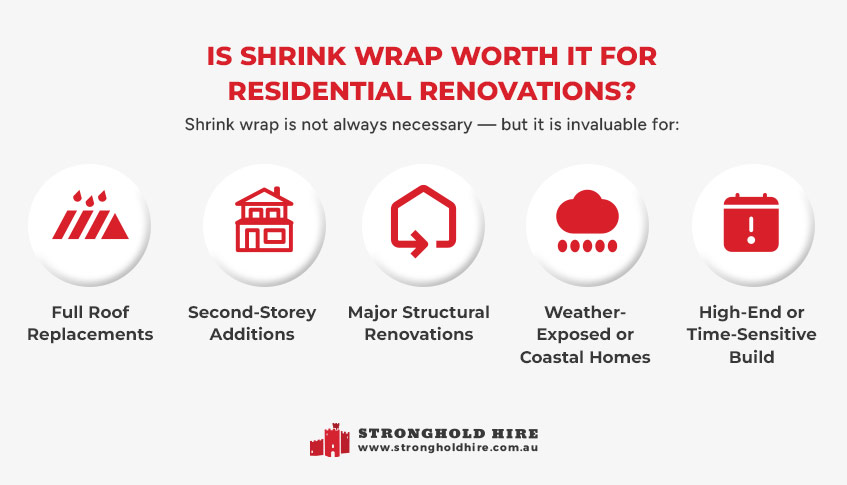
Shrink wrap is not always necessary — but it is invaluable for:
- Full roof replacements
- Second-storey additions
- Major structural renovations
- Weather-exposed or coastal homes
- High-end or time-sensitive builds
At Stronghold Hire, we assess each project individually to determine whether shrink wrap is the right solution, or whether a simpler weather-protection approach will suffice.
The Stronghold Hire Approach
We don’t just supply scaffold systems — we deliver engineered weather-protection solutions. From design through to installation, we ensure:
- Site-specific engineering
- Safe load management
- Proper bracing and anchoring
- Compliance with Australian Standards
- A practical solution that balances protection, safety and budget
If you’re planning a renovation and want peace of mind that your home is protected from the elements, shrink wrap scaffolding may be the answer.
Give us a call now on +61 2 8985 2020 or contact us online to discuss your project and find the right level of protection for your build.
