
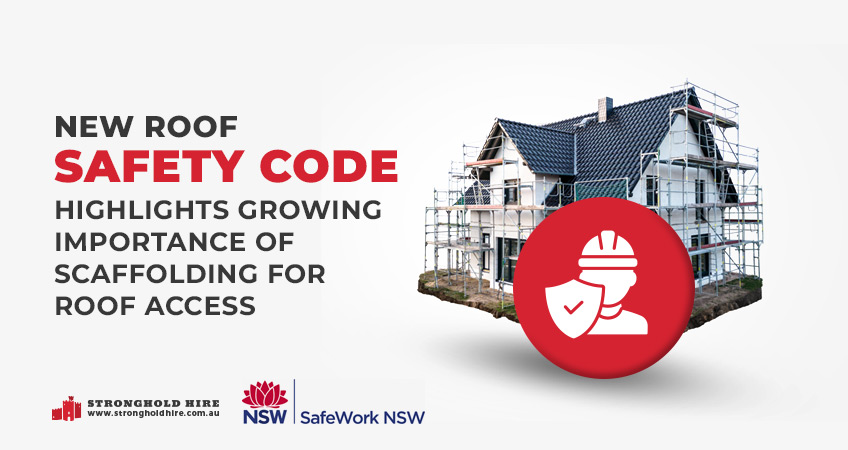
New Roof Safety Code Highlights Growing Importance of Scaffolding for Roof Access
The release of SafeWork NSW’s updated Work on Roofs: Commercial and Industrial Buildings Code of Practice in May 2026 has reinforced an important message for the construction industry: Safe roof access starts long before a worker steps onto the roof. The updated Code places greater emphasis on eliminating fall risks and prioritising collective protection measures over harness-only solutions. For many roof projects, scaffolding remains one of the most effective ways of achieving this objective.
Safe Access Is a Critical Part of Roof Safety
Many roof-related incidents occur before workers even begin their task. Accessing elevated roof areas often involves:
- Climbing ladders
- Moving between roof levels
- Carrying tools and materials
- Navigating fragile roof sections
- Working near roof edges
The new Code encourages businesses to carefully consider access methods based on:
- Frequency of access
- Number of workers
- Duration of works
- Equipment being transported
- Overall project risk
Scaffolding can provide safe and controlled access to these areas while significantly reducing exposure to fall hazards.
Creating Safe Working Platforms
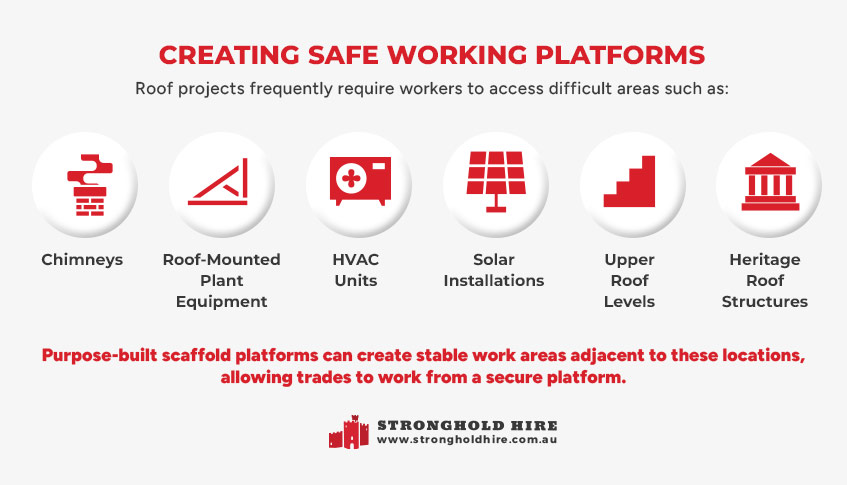
Roof projects frequently require workers to access difficult areas such as:
- Chimneys
- Roof-mounted plant equipment
- HVAC units
- Solar installations
- Upper roof levels
- Heritage roof structures
Purpose-built scaffold platforms can create stable work areas adjacent to these locations, allowing trades to work from a secure platform rather than directly from the roof surface itself. In many situations this reduces the need for workers to continually reposition harness systems while carrying out their work.
Working Between Multiple Roof Levels
One of the challenges commonly encountered on commercial and residential buildings is accessing higher roof sections from lower roof areas. Scaffolding can be designed to:
- Provide intermediate access platforms
- Bridge between roof levels
- Create stair access systems
- Establish safe material handling zones
- Improve movement around complex roof geometries
These solutions help contractors comply with the hierarchy of controls by providing collective protection for workers throughout the project.
Managing Fragile Roof Risks
The updated Code specifically highlights fragile roofing materials, skylights and penetrations as major hazards. Scaffold systems can assist by:
- Restricting access to fragile areas
- Providing alternative working platforms
- Creating protected access routes
- Reducing the amount of time workers spend directly on roof surfaces
This becomes particularly important on ageing industrial buildings where roof integrity may be uncertain.
Harnesses Still Have a Place
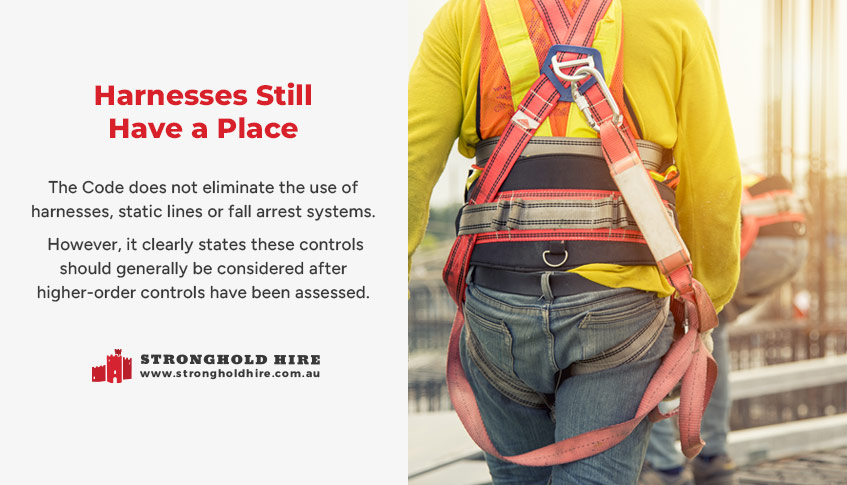
The Code does not eliminate the use of harnesses, static lines or fall arrest systems. However, it clearly states these controls should generally be considered after higher-order controls have been assessed. Scaffolding often forms part of a broader roof safety strategy by combining:
- Safe access
- Working platforms
- Edge protection
- Material loading areas
- Fall prevention systems
to create a safer overall work environment.
Planning Roof Projects Under the New Code
The updated Code encourages businesses to think beyond simply “getting onto the roof.” Instead, contractors should consider:
- How workers will access the roof
- Where they will perform the work
- How materials will be moved
- What rescue arrangements exist
- How fall risks can be eliminated or minimised
In many cases, properly designed scaffolding can address several of these requirements simultaneously.
The 2026 Roof Code of Practice – The Bottom Line
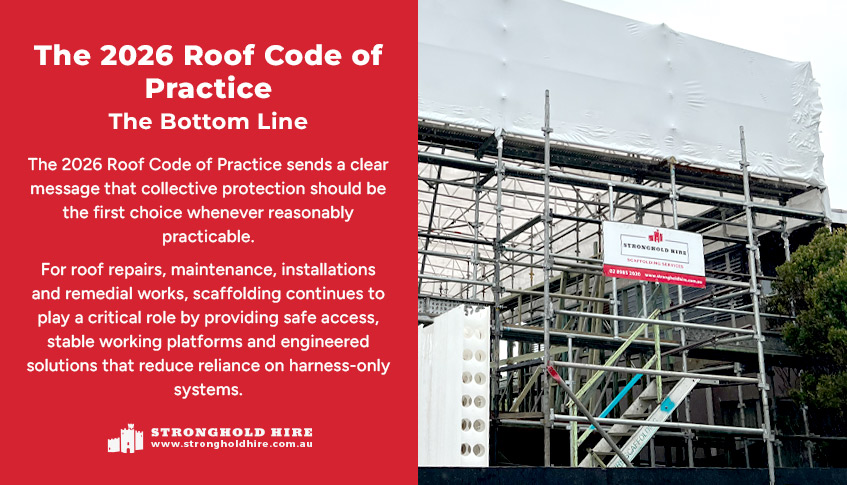
The 2026 Roof Code of Practice sends a clear message that collective protection should be the first choice whenever reasonably practicable. For roof repairs, maintenance, installations and remedial works, scaffolding continues to play a critical role by providing safe access, stable working platforms and engineered solutions that reduce reliance on harness-only systems. The result is a safer project, improved productivity and a work environment that aligns with modern roof safety expectations.
